

Introduction
Imagine arriving in China for the first time. You step out of Kunming Airport, and everyone around you seems to
be messaging, paying, and booking services onone app—WeChat (微信, Wēixìn).
For foreigners, it can feel overwhelming, but understanding WeChatis essential to daily life in China.
At Lens Talk, we introduce learners to WeChat in real-life contexts, turning a digital challenge into a fun cultural
and language learning experience.
1. WeChat Basics: More Than a MessagingApp
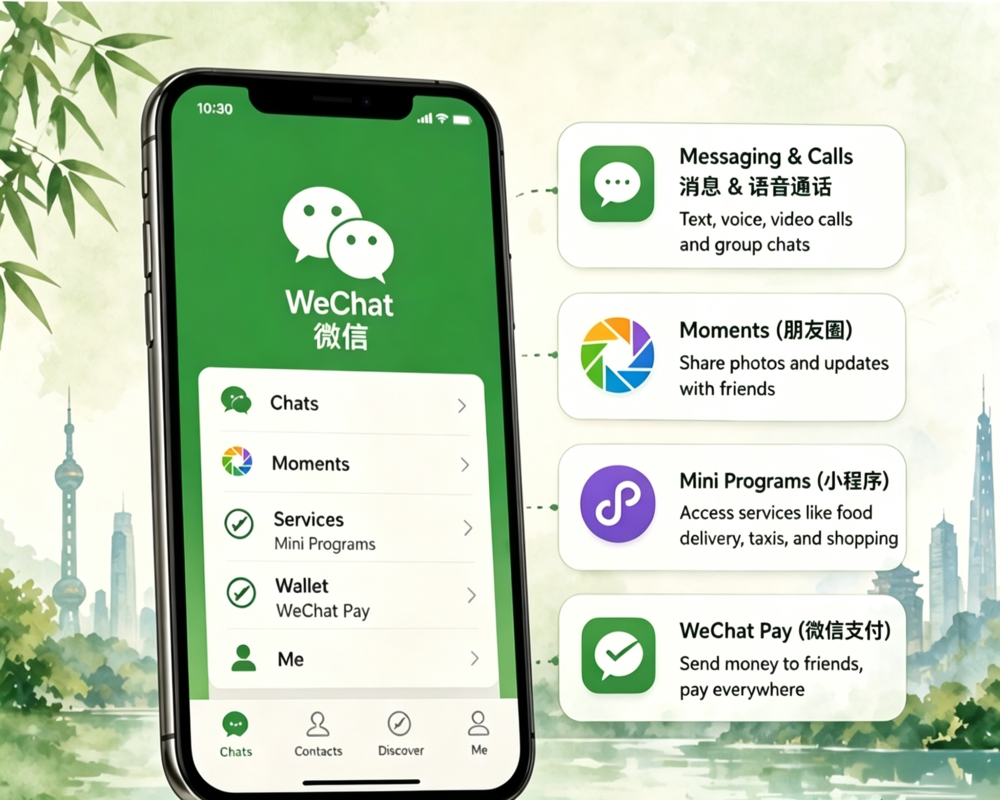
Most people think WeChat is just amessaging app. In reality, it’s a super app combining social media,payments,
and services.
- Messaging & Calls: Text, voice, video calls, and group chats
- Moments (朋友圈): Similar to Facebook’s timeline, sharing photos and updates
- Mini Programs (小程序): Access services like food delivery, taxis, and shopping without leaving the app
- WeChat Pay: Send money to friends, pay for groceries, and scan QR codes everywhere
Lens Talk Tip: In lessons, students practice sending voice messages, creating group chats, and sharing study
notes—practical exercises that double aslanguage practice.
2. Setting Up WeChat
- Download the app and register with a phone number.
- Add friends using QR codes—common in classrooms, restaurants, and social events.
- Explore basic settings: profile picture, status, and Moments.
Scenario: Students at Lens Talk scan each other’s QR codes to form study groups, combining tech
and social interaction.
3. WeChat in Daily Life
Paying for Everything
WeChat Pay is ubiquitous. From street foodstalls to high-end restaurants, QR codes are everywhere.
- Example: Buying dumplings at a market
- Scan QR code → enter amount → pay → enjoy meal
Lens Talk Tip: Practice phrases like “请问可以用微信支付吗?(Can Ipay with WeChat?)” during excursions.
Booking Services
- Mini Programs let you order taxis, book movie tickets, or even schedule doctor appointments.
- Example: Students book a language exchange session or cooking class using WeChat Mini Programs.
Lens Talk Tip: Using Mini Programs in class combines reading, comprehension,and functional language skills.
Connecting Socially
- Moments (朋友圈): Share study progress, food photos, or travel adventures
- Commenting requires basic conversational phrases
- Example phrases:
- “好漂亮!” (So beautiful!)
- “我也想去!” (I want to go too!)
Lens Talk Tip: Students post their language challenges or cultural experiences, practicingcasual writing and
emojis as part of modern Chinese communication.

4. WeChat and Language Learning
WeChat isn’t just for life logistics—it’s a tool for practicing Chinese.
- Join study groups or chat with classmates in Mandarin
- Share notes, recordings, or mini quizzes
- Use voice messages to practice tones and pronunciation
- Discuss Chinese culture via Moments posts
Scenario: A Lens Talk student shares a short voice clip describing a market visit. Teacher respond with
feedback, corrections, and encouragement—a dynamic,digital classroom.

5. Tips for Beginners
- Start Simple: Focus on messaging and voice calls before exploring Mini Programs.
- Scan QR Codes: It’s the easiest way to make new friends and join communities.
- Practice Writing: Use WeChat to write small posts or comments, reinforcing vocabulary.
- Learn Common Phrases: “谢谢 (xièxiè) – Thank you”, “请问 (qǐngwèn) – Excuse me”, “可以吗?(Is that okay?)”
- Observe Culture: Look at local Moments to understand trends, humor, and etiquette.
Lens Talk Tip: Teachers integrate these tips into class activities, guiding students to navigate WeChat while
improving reading, writing, and speaking skills.
6. Common Challenges
- Overwhelm: Too many features at once; solution: learn gradually.
- Privacy: Use privacy settings to control who sees your Moments.
- Language Barrier: Chinese menus and apps; solution: use Lens Talk guidance and translation tips incontext.
7. Fun Features to Explore
- Stickers and GIFs: Add personality to messages
- Red Packets (红包): Send and receive virtual money gifts
- WeChat Games: Casual games with friends to build interaction and vocabulary
Lens Talk Tip: Incorporating these features in classroom games makes learning interactive and culturally
relevant.
8. Why WeChat Matters for Learners
- Practical Communication: Ordering food, asking directions, paying bills
- Cultural Immersion: Understand jokes, trends, and social norms
- Language Practice: Send messages, voice notes, and engage in conversations
- Social Connection: Make friends, join study groups, and explore the city digitally
Conclusion
WeChat has transformed daily life in China into a digital, connected, andinteractive experience. For learners,
it’s not just an app—it’s a gateway to language practice, cultural immersion, and social engagement.
With Lens Talk, students learn to use WeChat confidently, combining practical skills with language learning in
authentic contexts. Embrace the app, explore its features, and watch your Mandarin skills flourishas you interact
with China digitally and in real life.